Moisture Investigation · Humidity Diagnostics

Musty Odor, Moisture & Humidity Investigation

Cleaning mold or replacing stained finishes does not explain why moisture returns. LossPoint investigates the conditions that allow humidity, condensation and water intrusion to persist—and separates an observed symptom from the mechanism producing it.

Based in St. George’s, Grenada, Caribbean · Serving the Caribbean

Request an Investigation →

01

Persistent moisture has more than one pathway

Musty odors, damp walls, peeling paint, wet insulation and recurring mold may reflect humid outdoor air entering the building, rain passing through the envelope, a cold surface below dew point, or moisture trapped inside an assembly. The location of the damage alone rarely distinguishes these causes. If the source is misidentified, repairs can make the surface look better without changing the conditions behind it.

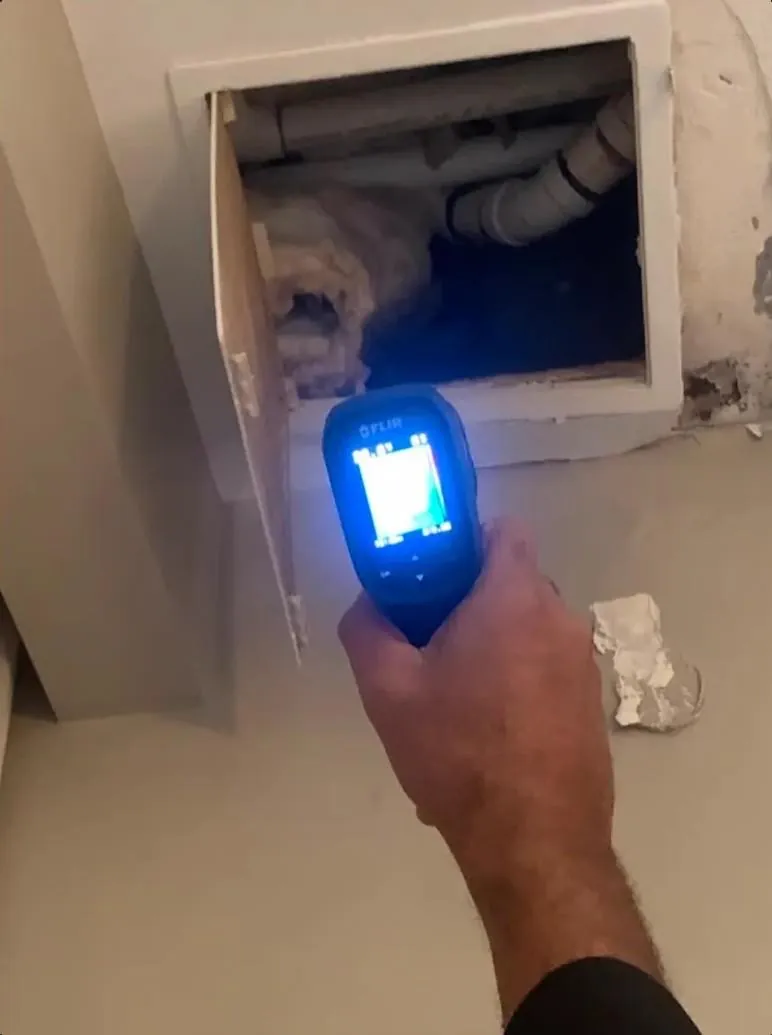
Handheld thermal camera directed at exposed piping above a ceiling
LossPoint field photo · Ceiling and concealed-piping inspectionLossPoint field photograph illustrating this type of investigation; not a record of every finding described below.

02

Measure the environment and the assembly

We compare affected and unaffected locations and document when conditions change. Material readings map the extent of moisture; air temperature, relative humidity and surface temperature indicate whether condensation is possible. Thermal imaging helps identify temperature patterns, while examination of roofs, joints, openings and walls tests plausible intrusion paths. A reading identifies a condition, not automatically its cause; the interpretation must fit the building and its operating history.

Measurements selected for the case

  • Moisture readings across materials and adjacent reference areas
  • Relative humidity, surface temperature and dew point comparison
  • Thermal imaging and building-envelope assessment where indicated

Across occupied and operational buildings

Relevant to hotels, hospitals and clinics, government buildings, warehouses, industrial facilities and commercial premises. The operational consequence differs by setting—from comfort and occupied-space conditions to stored materials—but the investigation begins with measured evidence rather than an assumed remedy.

From condition to corrective action

Findings connect the recurring symptom to the leading moisture mechanism, state the limits of what was observed and set out a correction appropriate to that mechanism. The same measurements can later be repeated to check whether the change improved conditions. This avoids treating every humidity complaint as either a cleaning problem or an equipment problem.

Common questions about this problem

Why does a hotel room still smell musty after cleaning?

Cleaning removes surface residue, but a musty odor usually returns while the moisture source remains, often in hidden materials, ductwork, behind furniture or under flooring. Odor is a useful warning sign; it does not identify a mold species or replace laboratory analysis. The investigation looks for where moisture accumulates and why, so the condition behind the smell can be corrected.

Guest Room Condensation →

Why does a wall get damp again after it has been painted?

Paint covers the symptom but does not change the moisture reaching the wall. Possible sources include rain entering through the envelope, rising or lateral moisture, a nearby pipe, or condensation on a surface cooler than the room's dew point. Comparing material moisture, surface temperature and indoor conditions helps show which mechanism is active before choosing between sealing, plumbing or ventilation work.

Why does the ceiling get wet when the air conditioning runs?

Moisture that appears only during cooling often points to condensate handling or condensation: a blocked drain pan or line, uninsulated ductwork or fittings, or cold surfaces exposed to humid ceiling-void air. These are possibilities to test, not a diagnosis. Observing when wetting starts, checking the condensate path and comparing surface temperatures with dew point narrow the cause.

HVAC Diagnostics →Guest Room Condensation →

Recurring suite moisture: examine the room and the exterior together

Observed condition

A field investigation of hotel suites recorded outdoor air-conditioning condensers facing a nearby retaining wall beside affected room walls. Recurring moisture and mould complaints were also reported in the suites. The condenser orientation raised a concern about possible hot discharge recirculation and heat exposure near those walls.

Evidence and interpretation

The room and exterior need to be examined together to understand equipment operation, wall conditions and potential moisture paths. Heat exposure beside a room does not establish that wall heating causes condensation. The investigation should distinguish rain entry, outdoor-air entry and condensation rather than assume that nearby equipment explains the indoor complaint.

Next decision / validation

Follow-up checks should compare relative humidity, air temperature, surface temperature and dew point, alongside examination of building-envelope paths. These comparisons should guide the choice of correction and its assessment under relevant weather and operating conditions. Follow-up testing and validation are required before a repair outcome can be confirmed.

← Back to field investigations

Tell us where moisture appears, when it returns and what has already been tried. Request a diagnostic investigation before another round of surface repair.

Describe the condition

Where it happens and how long it has been recurring.

Add facility details (optional)
Conditions observed

We will review your message and contact you to agree scope and next steps.

Your contact details are used only to reply to you and assess your enquiry.

See an illustrative Technical Evidence Brief →